
Health Food History
<
Back to all
Books Archive

No items found.
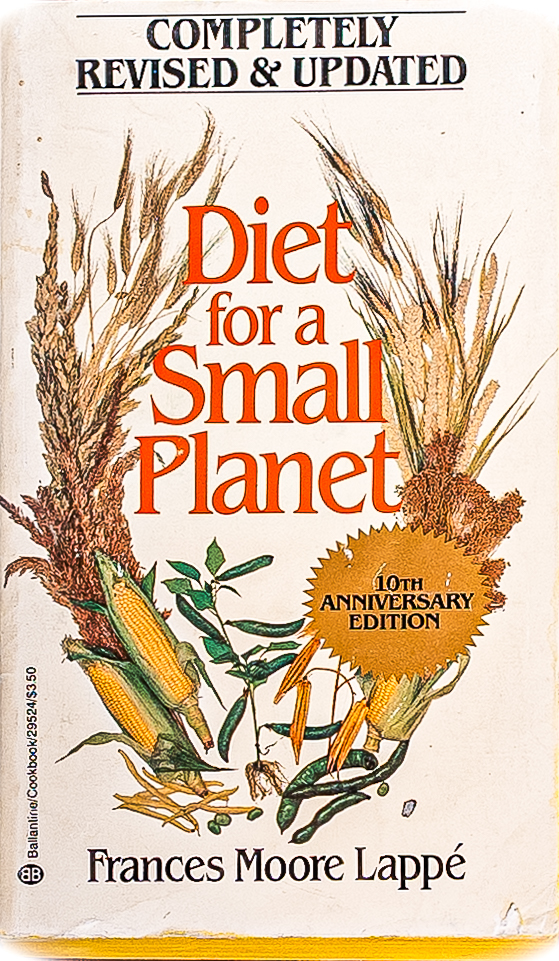
Diet For a Small Planet
1971
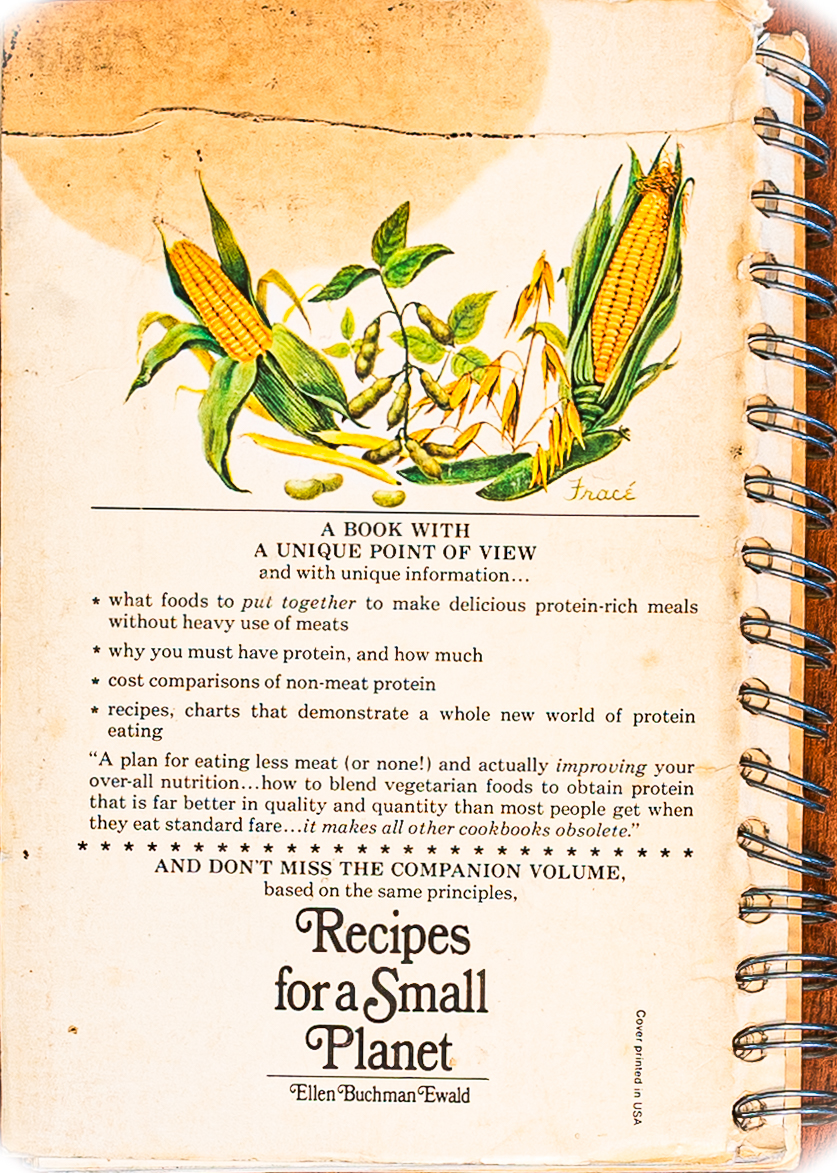
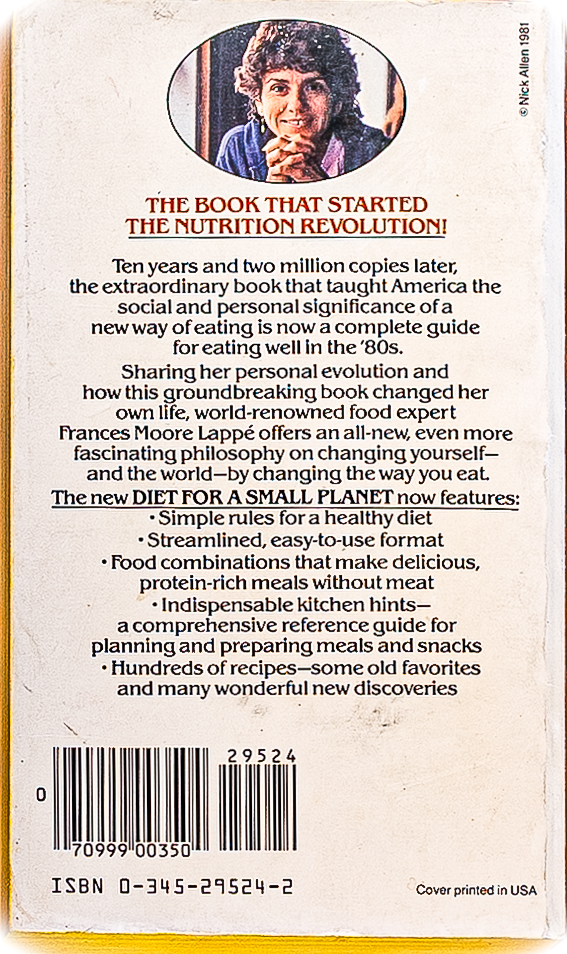
Diet for a Small Planet (1971) by Frances Moore Lappé was a groundbreaking book that not only linked food choices to global sustainability but also introduced the concept of “protein complementarity,” showing new vegetarians how to combine plant foods to create complete proteins.
Frances Moore Lappé’s Diet for a Small Planet (1971) became a landmark in the natural food movement by connecting personal eating habits with global hunger and environmental concerns. Its most influential contribution was introducing the concept of “protein complementarity,” teaching an emerging generation of vegetarians that they could get all essential amino acids by combining plant foods like beans and grains. By making vegetarianism both nutritionally sound and socially responsible, the book inspired millions to embrace plant-based eating as a healthy and sustainable lifestyle.
Key Takeaways:
- Links personal food choices—especially meat‑heavy, grain‑wasting diets—to global hunger, arguing that feeding livestock with grain reduces the amount of food available for humans.
- Introduces the concept of protein complementarity, reassuring new vegetarians that carefully combined plant foods can provide adequate protein without animal products.
- Presents vegetarianism as a political and ethical act that addresses injustice, resource waste, and environmental degradation rather than merely personal health.
- Inspires a generation of activist cooks, communal households, and food co‑ops to treat recipes as tools for social change, not just nourishment.
- Helps shift the health food movement toward questions of ecology, development, and global solidarity, expanding its moral horizon beyond individual wellness.
Categories
Vegetarianism
Cookbooks and Recipes
No items found.



© Health Food History 2025.
© Split Plate: The Untold History of America's Natural Food Movement 2025.
All rights reserved.
© Split Plate: The Untold History of America's Natural Food Movement 2025.
All rights reserved.