This site is not yet mobile friendly.
Please enter your email to recieve a link at your desktop or laptop computer:
Thank you! Your submission has been received!
Oops! Something went wrong while submitting the form.


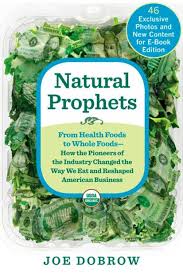
The landscape of natural and organic retail in America changed profoundly in the late twentieth century. Prior to the 1980s, health-food stores were typically small, eclectic, often countercultural spaces run by passionate advocates motivated more by ideology than business structure. These early stores—often cramped, unconventional, and operated by herbalists, vegetarians, and activists—laid the groundwork for what would later become a multibillion-dollar natural-foods industry. Figures like J.I. Rodale, Paul Bragg, and Adelle Davis helped establish the intellectual foundation, while early retailers such as Erewhon, Bread & Circus, and Mrs. Gooch’s provided influential models of organic retailing before the marketplace began to consolidate and scale.
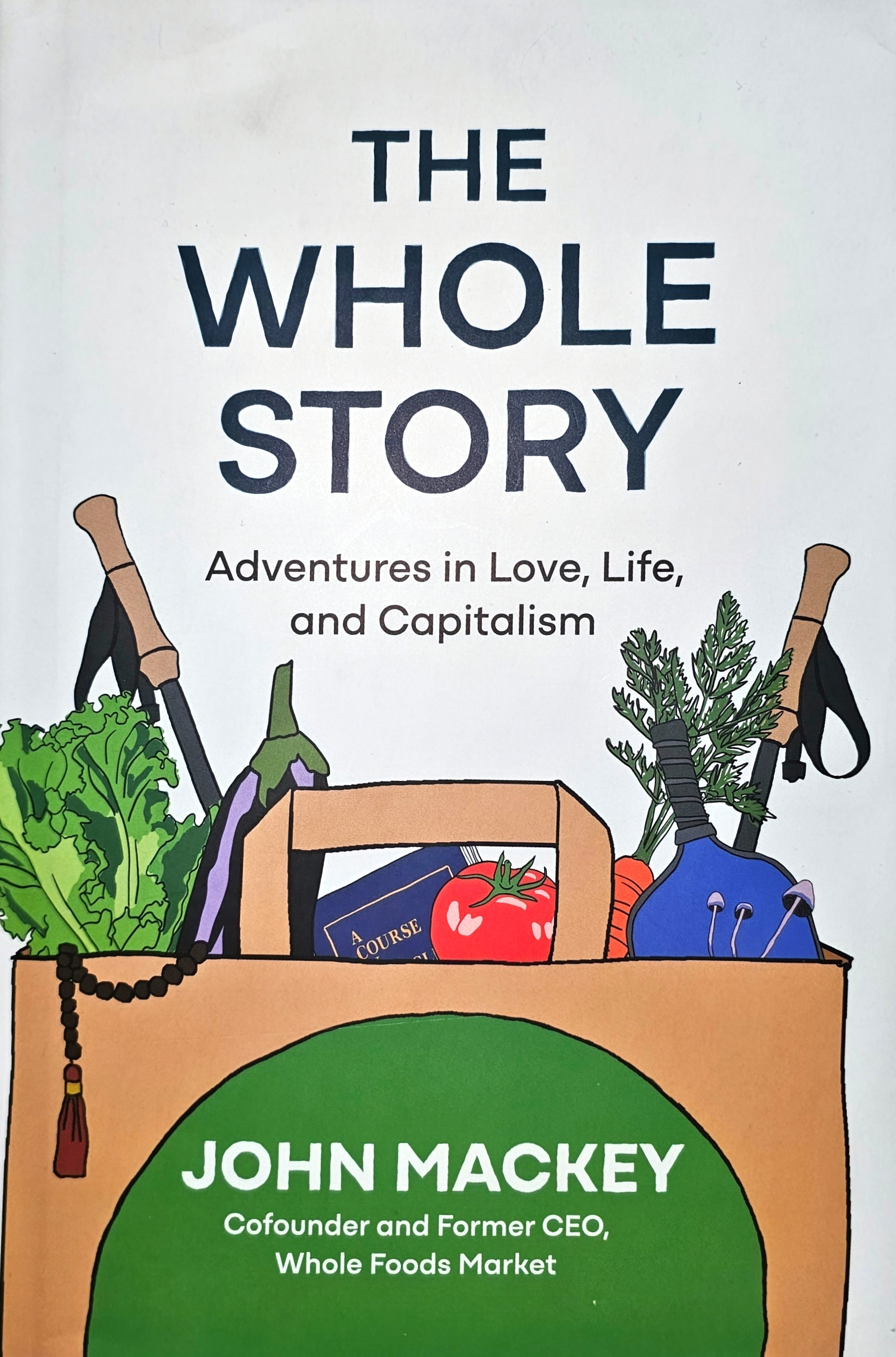
Into this environment emerged Whole Foods Market, a company that would redefine what a health-food store could be. In The Whole Story, John Mackey recounts the founding of the business in 1978 in Austin, Texas, when he and Renee Lawson Hardy opened SaferWay, a small natural-foods store and café. Mackey admits he knew very little about business and was driven primarily by idealism and a belief in the value of healthy eating and ethical food systems. The pivotal moment came in 1980, with the merger of SaferWay and Clarksville Natural Grocery to form the first Whole Foods Market—larger, cleaner, more organized, and designed to appeal beyond the traditional “health-nut” base. Whole Foods introduced innovations unheard of in the industry at the time: wide aisles, professional merchandising, attractive produce displays, in-store bakeries, and a welcoming environment that invited mainstream shoppers who might otherwise have felt intimidated.
This represented the turning point when the natural-foods movement shifted from the fringes to the mainstream. Whole Foods became the first company to prove that natural and organic foods could scale nationally and still maintain values-driven branding. As the company expanded—acquiring influential regional leaders such as Bread & Circus, Mrs. Gooch’s, Fresh Fields, and Wild Oats—it built an integrated national infrastructure of suppliers, standards, and distribution networks. Mackey emphasizes that the company’s success came not from abandoning ideals but from insisting that ethical business could coexist with profitability. His philosophy of “conscious capitalism” positioned Whole Foods not simply as a retailer, but as a cultural force promoting sustainability, animal-welfare standards, and transparent labeling long before they became common regulatory expectations.
By the early 2000s, the Whole Foods model defined the modern organic marketplace, helping drive national demand for organics, shaping government policy, and forcing conventional grocers like Safeway, Kroger, and eventually Walmart to adopt organic product lines. Whole Foods played a historic role as a market accelerator: raising national awareness, attracting investment, and expanding consumer expectations. At the same time, critics argued that corporate consolidation risked diluting the movement’s radical roots, and the company faced controversies over pricing, unionization, and the pressure of public markets. Yet even skeptics acknowledge that without Whole Foods, the organic movement might never have achieved such rapid scale or cultural legitimacy.
In many ways, Whole Foods stands as the defining example of the shift from grassroots natural-foods culture to a sophisticated, mainstream industry. Its journey illustrates the collision—and synergy—between idealism and capitalism, and between local authenticity and national scale. The pioneers of natural foods may not have predicted the rise of a giant like Whole Foods, but they laid the moral and conceptual foundation on which it was built. And as Mackey’s story demonstrates, the drive to transform American food culture requires both visionaries and builders—dreamers and disciplined entrepreneurs—working together to bend the marketplace toward health, sustainability, and conscious consumerism.